5 Common Mistakes Pharmacy Owners Make and How to Avoid Them

Introduction: Running a Pharmacy Is Not Easy
Running a pharmacy is a serious responsibility. You are not only selling products. You are helping people get the medicines they need at the right time.
But pharmacy owners also face many daily challenges.
You have to manage stock, check expiry dates, handle customers, deal with suppliers, track sales, manage staff, and still make a profit. That is a lot of work for one business.
Many pharmacy owners work very hard, but still lose money because of small mistakes. The problem is, these mistakes often look normal at first. Later, they become big problems.
The good news is simple: most pharmacy business mistakes can be avoided with better systems, better habits, and the right tools.
Let’s look at 5 common mistakes pharmacy owners make and how you can avoid them.
1. Tracking Stock Manually
Many pharmacy owners still use notebooks, Excel files, or memory to track medicine stock. This may work when the pharmacy is very small. But as the business grows, manual stock tracking becomes risky.
You may not know which medicines are running low. You may order too much of one item and forget to order another. Sometimes, staff may sell a product but forget to update the stock record.
This can create serious problems.
What Can Go Wrong?
- Fast-selling medicines may go out of stock.
- Slow-moving medicines may sit on shelves for months.
- Stock numbers may not match real shelf quantity.
- You may lose sales because a customer cannot find the medicine they need.
- You may buy extra stock without knowing what is already available.
How to Avoid This Mistake
Use a proper pharmacy inventory system. It should show real-time stock levels, low stock alerts, purchase history, and product-wise sales.
Also, make stock checking a regular habit. Even if you use software, do a physical stock check from time to time.
A smart pharmacy owner does not guess stock. They track it clearly.
2. Ignoring Medicine Expiry Dates
Expired medicine is one of the biggest risks in a pharmacy business. It can cause financial loss, damage customer trust, and create legal or safety problems.
Many pharmacy owners check expiry dates only when arranging shelves or during a rare stock audit. But by that time, it may already be too late.
Expired stock means your money is stuck in products you cannot sell.
Warning Signs of Poor Expiry Management
- Expired medicines are found during customer service.
- Staff do not check expiry before selling.
- Near-expiry stock is not separated.
- No system alerts you before expiry.
- Shelves are not arranged using first-expiry-first-out method.
How to Avoid This Mistake
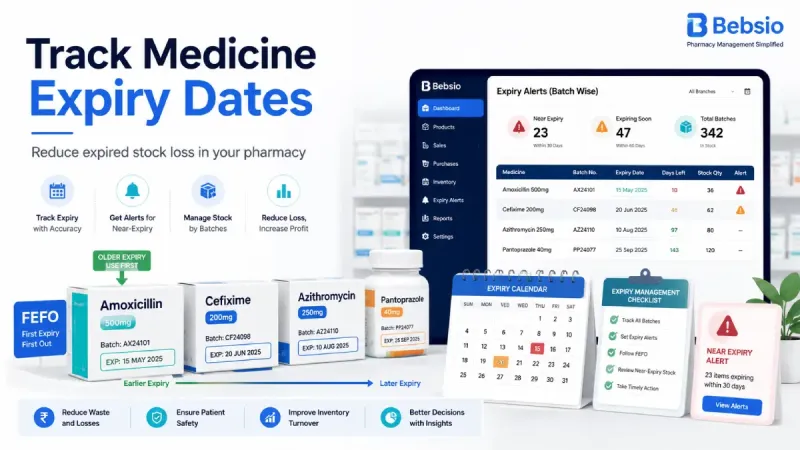
Use the FEFO method: First Expiry, First Out. This means medicines with earlier expiry dates should be sold first.
You can also create a simple monthly expiry review. Check which products will expire in the next 3 to 6 months. Then you can plan discounts, return to suppliers if possible, or avoid ordering more.
Modern pharmacy software can help by sending expiry alerts before it becomes a loss.
3. Poor Customer Service
In a pharmacy, customer trust is everything.
People come to you when they are sick, worried, tired, or in a hurry. If your staff is rude, slow, confused, or careless, customers may not come back.
Good customer service does not mean giving medical advice beyond your role. It means being polite, organized, and helpful.
Common Customer Service Mistakes
- Making customers wait too long.
- Not checking if a product is available quickly.
- Giving unclear answers.
- Not remembering regular customers.
- Handling complaints badly.
- Not explaining billing or pricing clearly.
How to Avoid This Mistake
Train your staff to speak politely and listen carefully. Keep your billing counter clean and fast. Make it easy to search medicines by name, category, brand, or generic name.
Also, keep customer records when possible. This helps you understand regular buyers, due payments, purchase history, and customer needs.
A customer may forget the price, but they remember how you treated them.
4. Not Understanding Sales and Profit Clearly
Many pharmacy owners check only daily cash. But daily cash is not the same as profit.
You may sell a lot and still earn less if you do not understand product cost, discounts, returns, expired items, supplier dues, and operating expenses.
Without reports, you are running the business in the dark.
Important Questions Every Pharmacy Owner Should Know
- Which medicines sell the most?
- Which products give better profit?
- Which items are slow-moving?
- Which suppliers are giving better terms?
- How much stock is unsold?
- How much money is due from customers?
- How much money do you owe suppliers?
How to Avoid This Mistake
Start using simple reports. You do not need to be an accountant to understand your pharmacy business.
Focus on these reports first:
- Daily sales report
- Profit report
- Stock report
- Expiry report
- Supplier due report
- Customer due report
- Return report
When you understand the numbers, you can make better decisions.
5. Depending Too Much on One Person
In many pharmacies, only the owner or one senior staff member knows everything. They know supplier contacts, stock details, customer dues, medicine locations, and daily processes.
This is dangerous.
If that person is absent, sick, leaves the job, or makes a mistake, the whole business suffers.
A pharmacy should not depend only on memory. It should depend on a clear system.
How to Avoid This Mistake
Create simple processes for daily work. Train more than one staff member. Keep supplier, customer, product, and sales records in one organized place.
Use role-based access if you use software. For example, one staff member can handle billing, another can manage stock, and the owner can see reports.
This gives you more control, not less.
Quick Tips to Identify a Mismanaged Pharmacy
Your pharmacy may need better management if you notice these signs:
- You often say, “I thought this item was available.”
- Customers ask for common medicines, but you are out of stock.
- Expired products are found on shelves.
- Staff cannot find products quickly.
- You do not know your exact daily profit.
- Supplier dues are not clearly tracked.
- Customer due payments are forgotten.
- You order products based on guesswork.
- Billing takes too much time.
- Reports are prepared only when there is a problem.
These signs do not mean your pharmacy is failing. They simply mean your system needs improvement.
The Old Way vs. The Smart Way of Running a Pharmacy
| The Old/Manual Way of Running a Pharmacy | The Smart/Automated Way |
| Stock is tracked in notebooks or memory | Stock is updated automatically after sales |
| Expiry dates are checked manually | Expiry alerts show near-expiry products early |
| Sales are counted only at the end of the day | Daily sales and profit reports are available anytime |
| Staff search products slowly | Products can be found quickly by name or category |
| Supplier and customer dues are written separately | Dues are tracked in one system |
| Decisions are based on guesswork | Decisions are based on real data |
| Reports take hours to prepare | Reports are generated in seconds |
| Owner must be present for everything | Owner can monitor the business more easily |
A well-managed pharmacy does not depend on guesswork. It depends on clear stock, clean records, trained staff, and smart decisions.
Conclusion: Small Improvements Can Save Big Money
Pharmacy owners work hard every day. But hard work alone is not enough anymore. In 2026, customers expect faster service, better availability, clear billing, and a professional experience.
The good news is that you do not need to change everything in one day.
Start small.
Track your stock better. Check expiry dates regularly. Train your staff. Understand your reports. Keep your customer and supplier records organized.
And most importantly, stop depending only on memory or manual notes.
Modern pharmacy management software can help you reduce stock loss, avoid expiry mistakes, improve billing speed, and make better business decisions. It gives you more control over your pharmacy, even when you are not standing at the counter.
Your pharmacy is more than a shop. It is a trusted place for your community.
So manage it with care, clarity, and the right tools.